

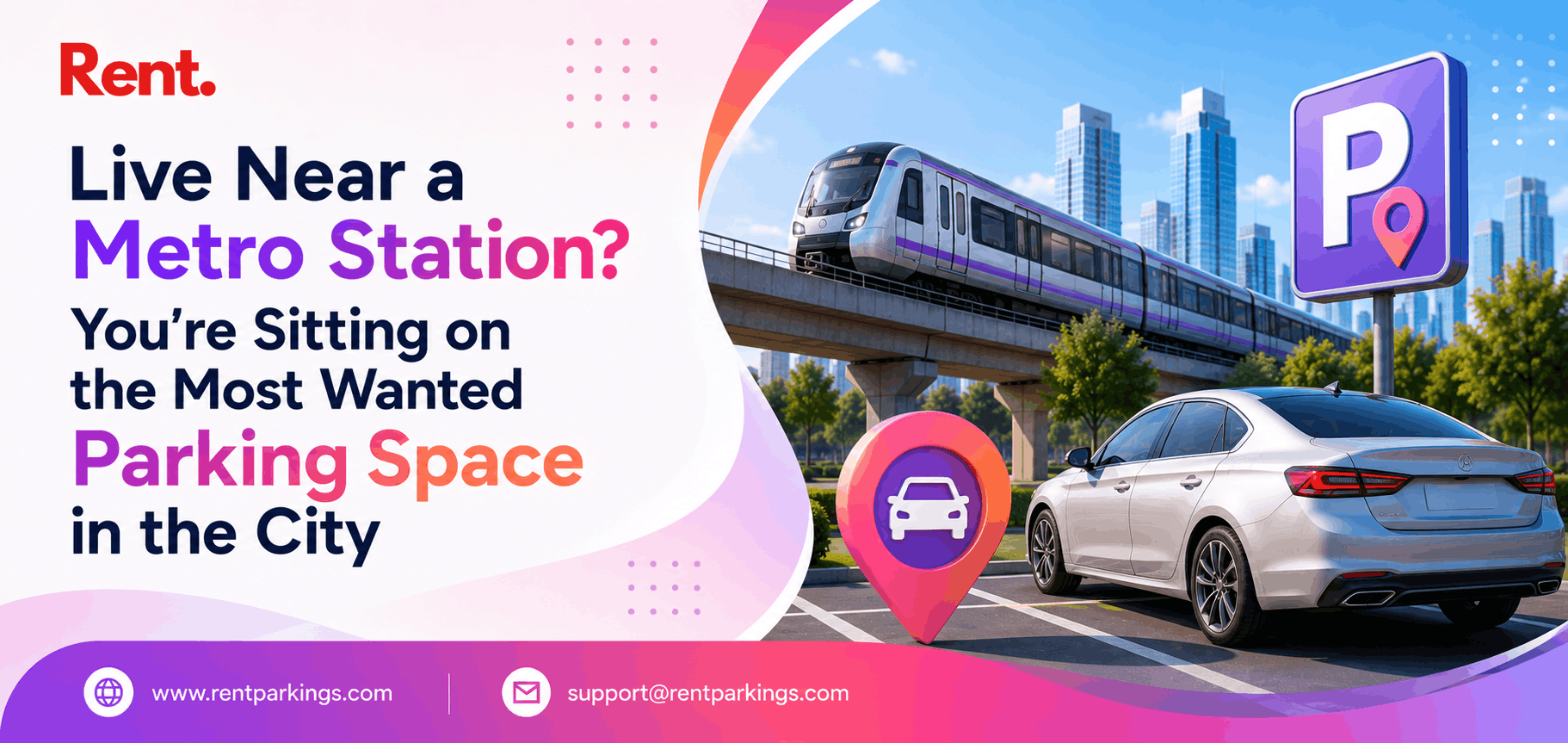
Live Near a Metro Station? You're Sitting on the Most Wanted Parking Space in the City
The Empty Spot You Walk Past Every Morning
Your Metro-Adjacent Parking Spot Is a Goldmine - Here's How to Cash In
Here's a scene that plays out near almost every metro station in India before 9 a.m. A commuter circles the lanes around the station, windows down, scanning for a gap. The official station parking filled up an hour ago. The paid lot two streets away is full too. They're already late. And they drive right past your building - where your parking spot sits empty all day because you take the metro yourself, or your second car rarely moves, or the slot's just been vacant since the tenant left.
That commuter would happily pay to park where you're parking nothing. Not once - every single working day, month after month. If you live within a short walk of a metro station, you are not just a resident. You are sitting on one of the most sought-after micro-assets in your entire city, and most people in your position have no idea.
This guide is about turning that daily near-miss into steady income - the how, the how-much, and the why-now - specifically for homeowners near India's fast-growing metro network. And the best part: listing that spot on RentParkings costs you nothing.
Why Metro-Adjacent Parking Is Quietly the Best Location in India
India's metro story has crossed a tipping point. As of 2026, the country operates a metro network of over 1,070 kilometres across 21 systems, with services running or under construction in 23 cities - the third-largest metro network on the planet. Daily ridership has climbed from roughly 2.8 million in 2013-14 to more than 11.2 million by 2025. In the National Capital Region, the new Namo Bharat rapid-rail corridor was fully connected in early 2026, pulling even more commuters toward station-first travel.
Every one of those millions of riders has to solve the same puzzle: how do I get from my home to the station, and where does my vehicle sit while I'm gone? For a huge share of them, the answer is drive to the station and park - the classic park-and-ride pattern. But here's the catch that creates your opportunity: metro stations were built to move people, not to store cars. Official parking is limited, fills up early, and rarely keeps pace with ridership. The demand for a safe, close, reliable parking spot near a station massively outstrips the supply.
That supply-demand gap is your edge. Location is the single biggest driver of what a parking space earns, and a short walk from a metro station is close to the best location a parking spot can have in urban India today. You didn't engineer it. You just happen to live there. But it's real value, and it's renewable every month - and a free listing on RentParkings is all it takes to put it to work.
Who This Is For (You Might Not Realise It's You)
This isn't only for people with a spare garage. The metro-parking opportunity fits a surprisingly wide range of households:
- You take the metro to work and your allotted car slot sits empty from morning to evening.
- You own a second parking slot in your society that your family never fully uses.
- You've stopped driving, or sold a car, but the slot is still yours.
- You have an open plot, a gated compound, or a driveway on a street that feeds a nearby station.
- You're a ground-floor resident or a plot owner near a station whose frontage is used by strangers for free anyway - you might as well earn from it.
If any of these sound like you and there's a metro station within comfortable walking distance, keep reading. The spot you've been treating as just parking is an income stream waiting to be switched on.
The Real Numbers: What a Metro-Side Spot Can Earn
Let's be honest and grounded rather than throw around fantasy figures. What your spot earns depends on three things: the city, how close you are to the station, and whether the space is covered and secure. But the logic is easy to follow.
A metro commuter typically needs parking on a monthly basis - they're not casual visitors, they're the same person parking five or six days a week. That's exactly the kind of tenant that makes parking income reliable: predictable, recurring, low-churn. Compare that to a spot in a random residential lane with no anchor nearby, which might sit unbooked for weeks. Proximity to a station is what converts an occasional-use space into a full-time earner.
In a metro city, monthly parking near a busy station commands a premium precisely because the alternative - circling for a spot, arriving late, or risking a tow - is so painful for the commuter. Covered parking earns more than open. A spot you can reach in two minutes on foot earns more than one ten minutes away. The point isn't a single magic number; it's that a metro-adjacent spot sits at the top end of whatever your city's parking rates are, and it stays booked.
Why recurring beats one-off
The quiet advantage of the metro tenant is retention. A commuter who finds a good, safe, close parking spot near their station does not want to go back to the daily hunt. Once they're parked with you, they tend to stay - which means less time spent re-listing and re-negotiating, and more months of income from a single arrangement. That stability is worth as much as the headline rate.
How to Turn Your Spot Into Income, Step by Step
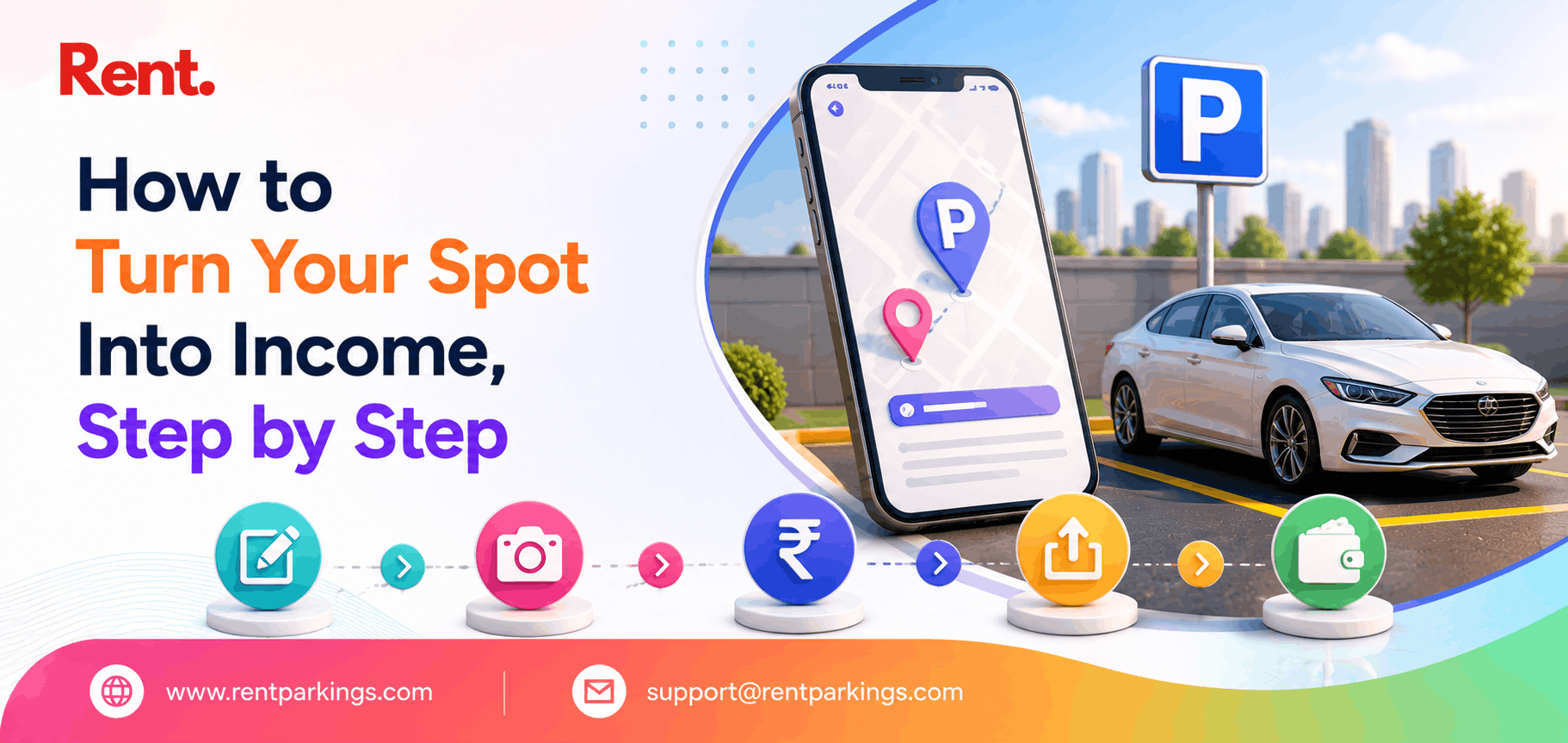
- Confirm your walk-time to the station. Anything you can walk in under ten minutes is genuinely attractive; under five is prime. Time it once so you can state it honestly in your listing.
- Check your permissions. If you're in a housing society, glance at the bye-laws and, where needed, get a quick nod from your RWA or managing committee about letting an outsider use your allotted or second slot. Owners of independent plots and driveways usually have a free hand.
- Photograph the spot well. A clear daytime photo showing the space, whether it's covered, and the approach from the road does more selling than any description. Show that it's safe and easy to pull into.
- List it free on RentParkings. Add the location, the walk-time to the station, size (car, bike, or both), whether it's covered, and your availability - all day, office hours only, nights only, or weekends. Listing is free, so there's no cost to simply switch the asset on.
- Set availability that suits your life. This is the elegant part: if you take the metro all day, offer the spot during office hours and keep your evenings. If you only need it on weekends, rent the weekdays. You're monetising the exact hours you don't use it.
- Screen, agree, and keep it simple. Pick a commuter you're comfortable with, agree on the terms and monthly amount, and keep basic records. A predictable, polite monthly tenant is exactly what you want here.
Match Your Availability to the Commuter Rhythm
Metro parking demand has a shape, and you can earn more by fitting your spot to it rather than fighting it.
The classic weekday commuter
The bread-and-butter tenant parks in the morning, rides the metro to work, and collects the vehicle in the evening. If your own routine leaves the spot empty during the day, this is a perfect overlap - you both use the same space at different times, and nobody loses anything.
The reverse-shift and night parker
Not every commuter is nine-to-five. Shift workers, hospitality staff, and people heading into the city for evenings need parking at hours when a typical resident's spot is free. If your household is home and parked all night but out all day, you can flip the model and offer daytime availability, or vice versa.
Weekends and event surges
On weekends, metros fill with people heading to markets, malls, temples, and events near central stations. A spot you keep free on Saturdays and Sundays can catch this weekend wave without touching your weekday routine at all.
Safety and Peace of Mind - for Both Sides
A fair question every owner asks: is it safe to let a stranger park at my home? Handled sensibly, yes - and it's one reason a structured platform like RentParkings beats an informal board-on-the-gate arrangement.
Keep it straightforward: agree clear terms up front, note the vehicle and its registration, and set expectations about timings and access. A monthly commuter is a repeat, identifiable person with a routine - not an anonymous stranger - which makes this far lower-risk than casual hourly use. For the commuter, your spot offers something the roadside never can: a car that isn't at risk of a no-parking challan, a tow, or a scrape in a chaotic public lot. That safety is a big part of why they'll pay a premium and stay.
Why Now Is the Moment, Not Next Year
Two things make 2026 the right time to switch your spot on. First, the metro network is still expanding fast - new lines, new stations, and rapid-rail corridors like Namo Bharat are pulling more commuters into park-and-ride behaviour every quarter. Each new station turns another set of ordinary homes into metro-adjacent gold. Second, the habit is hardening: as fuel costs, congestion, and tighter parking enforcement push people toward the metro, the demand for parking near stations only grows.
Early movers in any neighbourhood get the loyal, long-term tenants first. The commuter who parks with you this year is the one who stays for years. Waiting doesn't make your spot more valuable - it just means someone nearby lists their spot on RentParkings before you do.
A Simple Mindset Shift
Most people think about their home's value in terms of the flat itself - the carpet area, the view, the resale price. Very few think about the parking spot as a separate, working asset. But near a metro station, that spot has its own income potential, independent of whether you ever sell the house. It's the difference between an asset that sits idle and one that quietly pays you every month for doing nothing new.
You already own the location. You already own the spot. The only thing standing between it sitting empty and it earning is a free listing on RentParkings. That's a remarkably small step for a genuinely recurring return.
Conclusion
India's metro boom has created a very specific, very valuable kind of real estate that almost nobody is talking about: the humble parking spot near a station. Millions of commuters need it, stations can't supply enough of it, and if you live within a short walk of the platform, you have it - probably sitting empty right now.
Confirm your walk-time, sort out any society permission, take a clear photo, and list the spot free on RentParkings with availability that fits your life. Match it to the commuter rhythm - weekday office hours, nights, or weekends - keep the arrangement simple and safe, and let the same reliable tenant come back month after month.
The commuter circling your lane every morning has been trying to give you money for your empty spot for a while now. In 2026, with the metro only getting bigger, it's finally time to let them.
Frequently Asked Questions
Can I really earn from a parking spot just because it's near a metro station?
Yes. Proximity to a metro station is one of the strongest location advantages a parking space can have in urban India, because commuter demand for park-and-ride parking far exceeds the limited official parking at most stations. A close, safe spot tends to stay booked on a recurring monthly basis, which is exactly what makes the income reliable.
How close to the station does my spot need to be?
Walk-time matters more than distance. A spot you can reach on foot in under ten minutes is genuinely attractive to commuters, and under five minutes is prime. Time the walk once and state it honestly in your listing - it's one of the biggest factors in how quickly your spot gets booked.
I take the metro all day - can I rent my spot only during office hours?
Absolutely, and it's the ideal setup. If your own vehicle is away or your slot is empty during the day, you can offer the spot during office hours and keep your evenings and nights for yourself. You're simply monetising the exact hours you don't use it.
Do I need permission from my housing society to rent my parking slot?
If you live in a housing society, check the bye-laws and, where required, get a nod from your RWA or managing committee before letting an outsider use your allotted or second slot. Owners of independent plots, driveways, and open compounds usually have a free hand.
Is it safe to let a stranger park at my home?
Handled sensibly, yes. A monthly metro commuter is a repeat, identifiable person with a fixed routine - not an anonymous casual user - which makes it lower-risk. Agree clear terms up front, note the vehicle and registration, and set expectations about timings and access.
What kind of parking can I list - only a car garage?
Not at all. You can list a covered or open car slot, a two-wheeler space, a driveway, or an open compound. Covered and closer spots earn a premium, but even a modest two-wheeler corner near a busy station has real demand.
Why is monthly commuter parking better than hourly or casual rental?
Commuters park on a recurring basis, usually five or six days a week, and once they find a safe spot close to their station they tend to stay. That means predictable, low-churn income and far less time spent re-listing, compared with occasional one-off bookings.
How much does it cost to list my parking space on RentParkings?
Listing your parking space on RentParkings is free. You add the location, walk-time to the station, size, whether it's covered, and your availability, and start receiving interest - with no upfront cost to switch your idle spot into an earning one.
What if I only want to rent my spot on weekends?
That works well too. Weekends bring metro riders heading to markets, malls, and events near central stations. You can keep your spot free on Saturdays and Sundays for this weekend demand while using it normally on weekdays.
Will demand for metro parking keep growing?
The trend points that way. India's metro network is expanding rapidly across 23 cities with new lines and rapid-rail corridors, and daily ridership has been rising for years. As more people shift to metro travel, demand for parking near stations continues to grow - which is why listing early helps you secure loyal, long-term tenants.
Share This post
Search
Recent Post
What Happens When You Need Your Parking...
01 Sep, 2026
How Listing Your Parking Space in India...
31 Aug, 2026
Parking Space vs Gold: The Idle Asset Th...
28 Aug, 2026
Your Garage Hasn't Parked a Car in Month...
26 Aug, 2026
Someone Dents a Car in Your Rented Parki...
25 Aug, 2026
Your Vacant Plot Is Not Free to Own: How...
24 Aug, 2026
Coaching Centre Parking in India: Why Ko...
21 Aug, 2026
India's PG and Co-Living Boom Has a Park...
20 Aug, 2026