

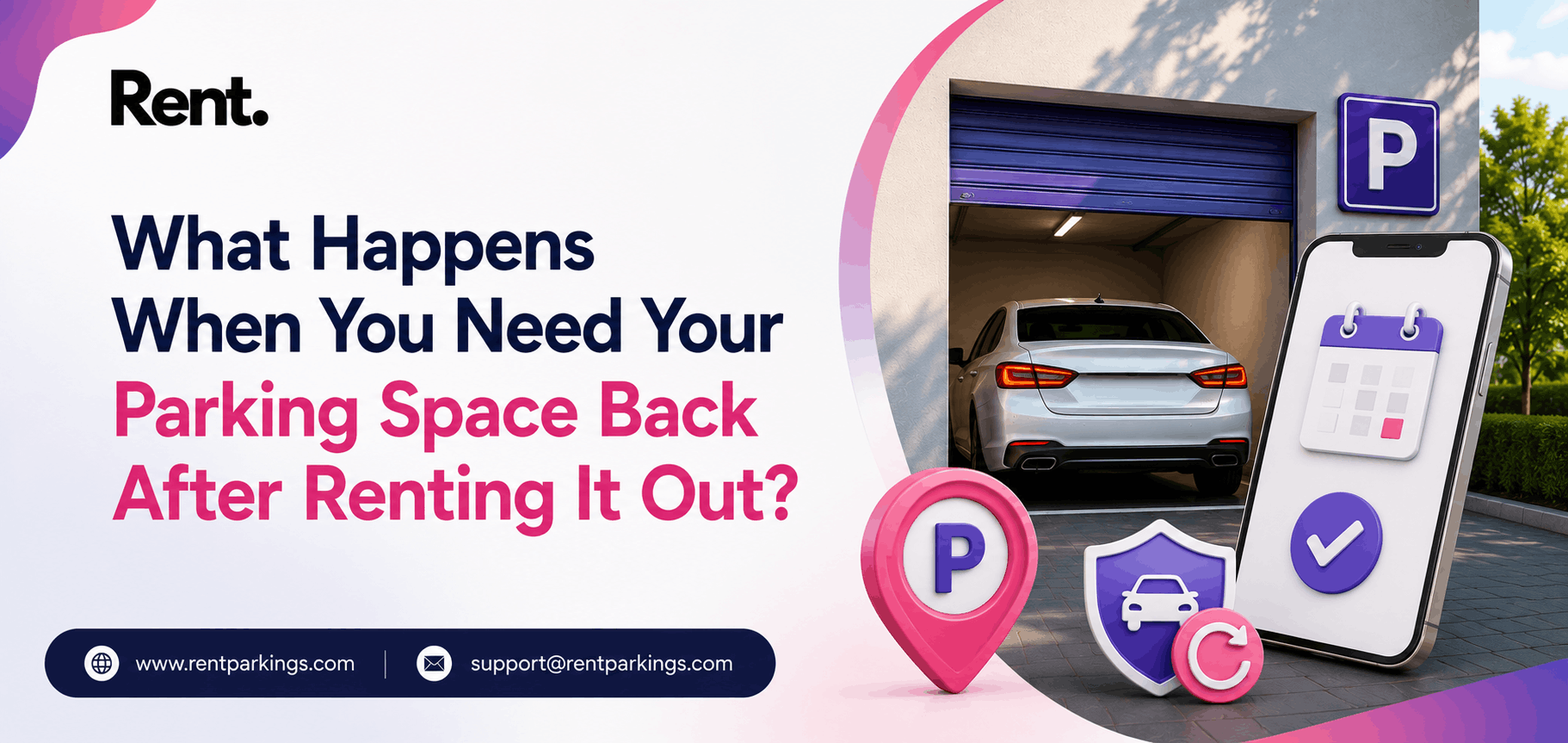
What Happens When You Need Your Parking Space Back After Renting It Out?
Picture this. You list your driveway on RentParkings on a Tuesday. By the following weekend, a nearby office-goer has booked it for the month, and the extra money quietly starts covering part of your society maintenance bill. Then, three weeks later, your cousin's wedding lands on the calendar, and every relative in the family is driving down for four days straight. You need that same driveway back, and you need it now.
This exact worry stops more Indian property owners from listing their unused space than almost anything else. Not the paperwork, not the pricing, not even the idea of a stranger parking in front of their gate. It's the fear of losing control over something that's still, underneath everything else, theirs. If you've had that thought while scrolling past RentParkings, this piece is for you.
The Fear Behind "What If I Need It Back?"
Most first-time hosts don't hesitate because they doubt the income potential. They hesitate because renting out physical space feels permanent in a way that renting out, say, a spare room on a travel app doesn't. A parking spot is attached to your home. It's where your own car used to sit, or where you're planning to park the second vehicle you're saving up for next year.
There's also a quieter worry underneath that one: what if the person renting it refuses to leave, or what if getting the space back turns into an argument nobody wants to have. Both concerns are reasonable. Neither one should stop you from earning off space that's otherwise sitting empty and doing nothing for you.
How Getting Your Space Back Actually Works
Here's the part that surprises most new hosts: you were never locked in to begin with. When you list on RentParkings, you decide the rental structure from day one, whether that's hourly, daily, or monthly, and that choice shapes exactly how flexible you stay.
- Hourly and daily bookings end automatically. There's no ongoing commitment past the slot the renter paid for, so your space is simply yours again once the clock runs out.
- Monthly arrangements work more like a short lease. You and the renter agree on the term upfront, and either side can flag an end date with reasonable notice, usually a few days to a couple of weeks depending on what you've set.
- Pausing your listing takes a few taps. If you know you'll need the space for a week or two, you switch it off, use your driveway, and switch it back on when you're done. No renter can book a slot you've already blocked.
None of this requires a phone call to customer support or a drawn-out dispute. You're the owner. The listing exists because you chose to publish it, and it stops existing the moment you choose otherwise. If you haven't set up a listing yet and want to see exactly where these pause and notice settings live, How to List Your Empty Parking Space for Rent: A First-Timer Walkthrough shows the process from start to finish.
Real Situations Where Owners Take Their Spot Back
It helps to think through the actual moments this comes up, because they're rarely dramatic. They're just ordinary life happening around a parking spot.
- A family wedding or a religious function at home that needs the driveway clear for a few days.
- Finally buying that second car you've been putting off, which means the spot goes back to daily use.
- A short home renovation where contractors need the space for material or equipment.
- Selling the flat or the plot, which naturally ends the listing along with the sale.
- Visiting relatives during a festival week who need somewhere to park for a few days.
Every one of these is handled the same way: you edit or pause the listing before the date you need it, and the system stops taking new bookings for that window. Existing hourly or daily bookings simply run their course and close out on their own.
What Happens to an Ongoing Booking When You Pull Your Listing?
This is where the notice period matters. If someone has booked your space for a single afternoon or a weekend, that booking plays out as agreed and then it's over, no different from a hotel checkout. You don't need to intervene at all.
Monthly renters are a different case, and it's worth being upfront about that when you set up the listing. Most hosts on RentParkings mention their expected notice window in the listing details, something like fifteen or thirty days, so the renter isn't caught off guard and neither are you. It's a small step, but it turns a potentially awkward conversation into something both sides already agreed to.
One thing worth remembering: you're never obligated to renew a monthly arrangement past its term. If a renter has been difficult, or you simply want your driveway back for good, you let the term lapse and don't relist it. That decision sits entirely with you.
Where This Question Comes Up Most Often
Some property types attract this worry more than others, usually because the space in question doubles as something the owner uses occasionally rather than never.
A driveway is the classic example. Plenty of owners list their driveway for weekday office hours and simply block it out on weekends when family visits. Stilt and covered parking inside apartment complexes raises a similar question, since the allotted bay technically belongs to the flat owner even when it sits empty most days. If you're unclear on where you stand legally with a stilt or covered spot, the specifics get walked through in How to Rent Out Your Empty Parking Space in India: A Complete Guide.
Basements and garages come up too, especially in older independent houses where the ground floor was built for a car that no longer lives there. Vacant plots near construction zones are another common one, rented out on a rolling monthly basis until the owner is ready to build. In every case, the underlying flexibility is identical: you set the terms, and you can change them. City-specific rate ranges for each of these property types are broken down in Rent Parking Space in India: Complete Guide, which is a useful starting point before you set your own price.
Is It Still Worth Listing If You Might Need It Back Sometime?
This is usually the real question hiding behind the flexibility one. If you can't commit your space forever, is the income even meaningful?
For most owners, yes, and the math is simpler than it looks. A driveway that earns even on weekdays, while sitting free for weekend family use, still adds up to real money over a year. There's no obligation to list your space full-time or hand over permanent access. You're monetising the hours it would otherwise sit doing nothing, which is a very different proposition from committing it forever.
If you want a sense of realistic numbers before deciding how to structure your own listing, How Much Can Your Empty Parking Space Really Earn? lays out ranges by city and rental type. Listing itself costs nothing on RentParkings, and there's no subscription fee or commission just to publish your space. You only benefit when someone actually books it.
Trust Works Both Ways: Verification and Payments
Control isn't only about ending a listing when you need to. It's also about who you're letting park there in the first place, and how you get paid for it. RentParkings verifies renter details before a booking is confirmed, so you're not handing your gate key over to a stranger with no footprint on the platform.
Payments run through UPI or net banking rather than cash changing hands at the gate, which keeps a clean record of every transaction and removes the awkwardness of collecting money in person. You set your own hourly, daily, or monthly rate from the start, and you can adjust it whenever demand in your area changes. Nobody negotiates that price for you.
For a broader look at how the legal, tax, and safety pieces fit together once you start earning regularly, Renting Your Parking Space in India: The Legal, Tax, and Safety Guide is worth a read before your first booking comes in.
Frequently Asked Questions
1. Can I really get my parking space back whenever I want?
Yes. Hourly and daily bookings end on their own once the paid slot is over. For monthly arrangements, you set an end date or notice period upfront, and you're free to stop renewing whenever you choose.
2. Does it cost anything to list my parking space on RentParkings?
No. Listing is completely free, with no signup fee, no subscription, and no charge just to publish your space. You only see any benefit once a booking actually comes through.
3. What if a renter refuses to leave after their booking ends?
This is rare, especially with verified renters and clear time-bound bookings, but RentParkings keeps a record of every booking's start and end time, which gives you documented proof if a dispute ever needs to be raised.
4. Can I pause my listing instead of removing it completely?
Yes. Pausing takes a few taps and immediately stops new bookings for the dates you block out, without deleting your listing history or forcing you to set everything up again later.
5. How much notice do I need to give a monthly renter before ending the arrangement?
There's no fixed national rule, but most hosts set a notice period of fifteen to thirty days in their listing terms, which keeps things fair and predictable for both sides.
6. Will I earn less if I only list my space part-time?
You'll earn less than a full-time listing would bring in, naturally, but even weekday-only or occasional listings add up over months. Many owners deliberately keep weekends or festival dates blocked and still see meaningful income.
7. Do I have to accept every booking request that comes in?
No. You review requests before confirming them, and you're free to decline anything that doesn't suit your schedule or comfort level.
8. What happens to my listing if I sell my flat or plot?
You simply remove or deactivate the listing when the sale goes through. Since there's no long-term contract binding the space itself, this takes minutes, not paperwork.
9. Is it safe to let someone park at my property if I'm not verifying them myself?
RentParkings verifies renter identity and booking details before confirming a reservation, so you're not relying purely on a gut check at the gate the way you would with an informal, word-of-mouth arrangement.
10. How do I actually get paid, and who decides the price?
Payments come through UPI or net banking directly tied to each booking, and you set your own hourly, daily, or monthly rate from the start. You can revise your pricing anytime demand in your area shifts.
Your Space, Your Terms
The honest answer to "can I get my parking space back" is yes, almost always on your own schedule and without a fight. Renting it out doesn't mean signing it away. It means putting empty hours to work while keeping full say over when those hours start and stop.
If a driveway, garage, or vacant patch of land near you has been sitting idle while you weighed this exact worry, there's no real reason left to wait. List Your Parking Space on RentParkings today, set your own price and rental terms, and start turning that unused space into steady monthly income you can pause or stop whenever life demands it.
Share This post
Search
Recent Post
How Listing Your Parking Space in India...
31 Aug, 2026
Parking Space vs Gold: The Idle Asset Th...
28 Aug, 2026
Your Garage Hasn't Parked a Car in Month...
26 Aug, 2026
Someone Dents a Car in Your Rented Parki...
25 Aug, 2026
Your Vacant Plot Is Not Free to Own: How...
24 Aug, 2026
Coaching Centre Parking in India: Why Ko...
21 Aug, 2026
India's PG and Co-Living Boom Has a Park...
20 Aug, 2026
Amusement and Water Park Parking in Indi...
19 Aug, 2026