

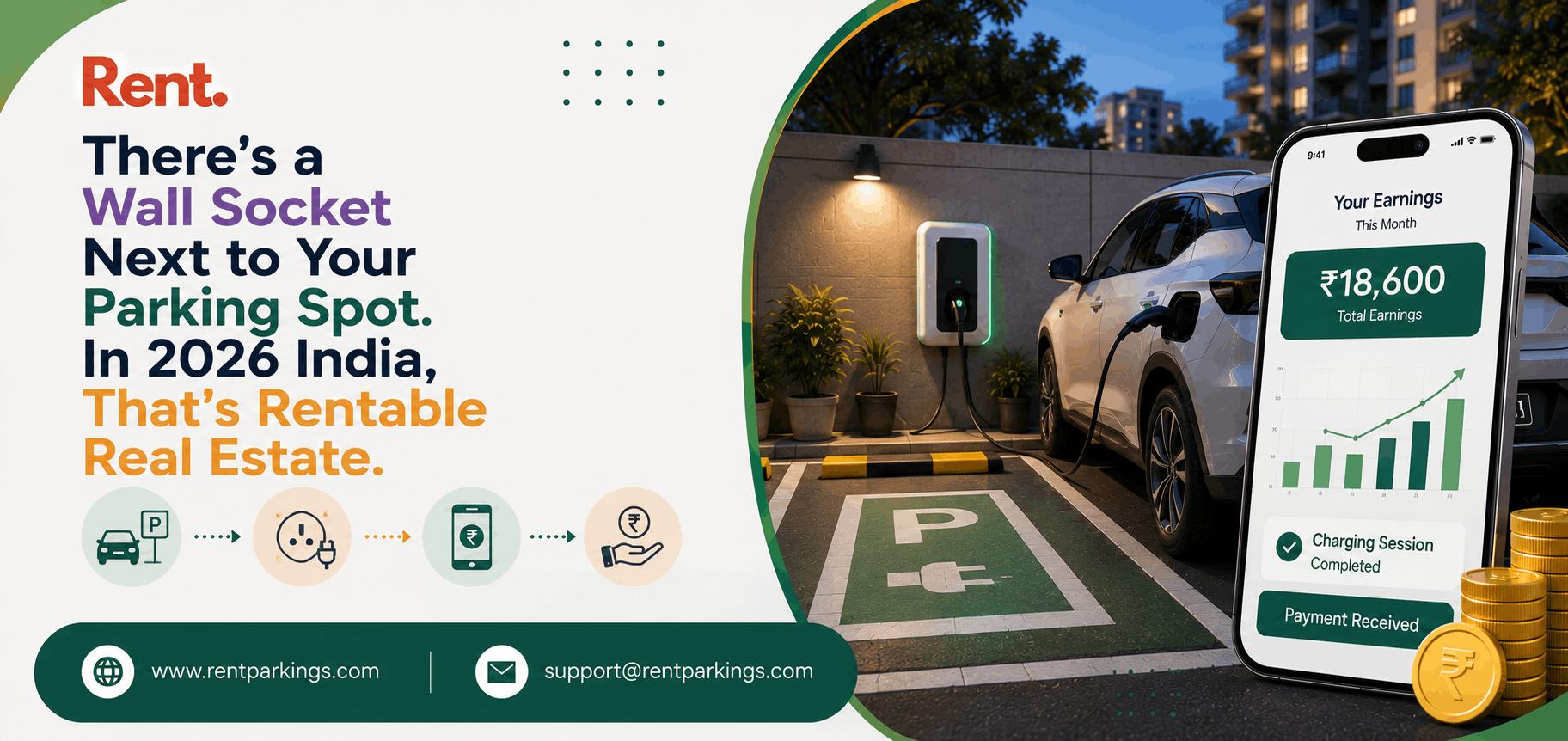
There's a Wall Socket Next to Your Parking Spot. In 2026 India, That's Rentable Real Estate.
A friend in Pune told me something last month that stuck with me. He'd bought an electric hatchback in April, thrilled about the fuel savings, and then spent the next six weeks fighting his own housing society over a single plug point in the basement. Not the car. Not the price of electricity. A plug. Where to put it, whose meter it ran off, whether the watchman would object. He eventually gave up and started charging at his cousin's place two kilometres away, paying a little something each month for the privilege.
That story is not unusual anymore. Across the country, the bottleneck in going electric has quietly shifted. It used to be the vehicles were too expensive or too rare. Now they're everywhere, and the thing people can't lay their hands on is somewhere to park and plug in without a fight. Which means, if you happen to own a parking spot with a working socket nearby, you're sitting on something a lot of your neighbours would pay to use — and platforms such as India's parking marketplace now make handing that spot to a paying driver almost effortless.
Why a plug became harder to find than a charger
Think about where an ordinary Indian actually lives. A flat in a society, often rented. A building put up years before anyone imagined a car needing six hours on the mains. Shared basements. Contested parking. A wiring diagram that assumed nothing heavier than a water pump.
Public charging stations get built and photographed and announced, but almost nobody wants to structure their week around them. Who wants to babysit a car at a mall charger on a weeknight? What people want is dull and domestic — plug in when you get home, unplug when you leave, forget about it. That kind of charging needs a fixed, private spot with power. And that is precisely the thing the housing stock in Bengaluru, Hyderabad, Delhi NCR and every other big city was never designed to hand out.
So a gap has opened, and gaps like this get filled by whoever moves first. On one side: drivers who need a reliable corner to sit and sip current. On the other: people with a spot going empty half the day and a socket a few feet away, who never once thought of it as an asset.
What separates a spot worth paying extra for
Be clear-eyed about what you actually have, because not every empty rectangle earns the premium. When a driver reads your listing, three things decide whether they message you.
Power within cable reach
You don't need showroom equipment. A regular 15-amp point — the sort your geyser or air conditioner already uses — will fill most electric cars overnight and an electric two-wheeler in an hour or two. If a socket sits close enough to the spot, or you're happy to have an electrician bring a weatherproof one out to it, you've jumped into a higher bracket than the powerless spot next door. The costly DC fast chargers make headlines; the humble wall point does the actual work for the overwhelming majority of home charging in this country.
A cable run that doesn't scare anyone
Safety is the quiet dealbreaker. A wire that has to snake across a shared driveway, drop from a window, or lie in a monsoon puddle in Kochi or Mumbai will lose you renters no matter how good the price. A wire that runs neat along a wall to a covered point wins you the same person for months. If your parking is a stilt or otherwise roofed — common on the ground floor of southern apartments — you're already ahead, because a dry car and a dry connection matter more here than owners realise.
Where the spot sits
Location, as ever, moves the number most. A charging-ready spot beside a place people work all day is the jackpot, because a commuter will happily leave a car plugged in through a full shift. If you're anywhere near a tech belt, it's worth seeing how Parking Near India's IT Parks: How Tech-Corridor Commuters Actually Find a Spot (2026) describes the daily scramble — the same person hunting a plain bay will pay more for one where the battery fills while they're at their desk. Stations do the same thing to demand: park, plug, catch the train. RentParkings made this case earlier in a piece on why, if you live near a metro station, you're sitting on the most wanted parking space in the city. Put a socket on a spot like that and you've layered one premium on another.
The renters you'd never expect
Picture the buyer and you'll picture a sleek electric SUV. The real crowd is smaller and far larger in number: scooters and bikes. Electric two-wheelers vastly outnumber electric cars on Indian roads, and their riders feel the pinch hardest — a student in Coimbatore, a delivery rider in Gurugram, often with no assigned parking, forget a socket. That squeeze is the one RentParkings pulled apart in India Builds Its Parking Around Cars, Then Wonders Where to Put 260 Million Scooters. For you it reads as opportunity: one covered spot with a plug can hold a car through the night and a couple of scooters by day, and two-wheeler riders want exactly the modest, everyday deal you're in a position to give.
Beyond them sit the people you'd never otherwise cross paths with — someone in town for a fortnight of work, a visitor spending long days at a hospital nearby, a small delivery outfit wanting a base to top up between runs. What every one of them prizes is the same word: dependable. A named, private spot is dependable in a way a chaotic public lot never manages to be.
First, check whether the spot is yours to let

Sort out ownership before a single rupee changes hands, because nothing kills a tidy side income quicker than your society secretary knocking. In plenty of Indian buildings, the stilt or covered bay you've parked in for years isn't legally yours to sub-let the way you'd assume — it can be common area handed to you for use, sitting under rules your Resident Welfare Association is entitled to enforce. It's murky ground, and it pays to stand on solid footing first. RentParkings walks through exactly this in Who Actually Owns the Parking in Your Apartment? Stilt, Covered & Open Parking Rights in India (2026), laying out where you're free and where you'll want a nod from the committee.
In practice it's rarely a wall. Own an independent house, a shop with its own frontage, or a plot with private parking, and you decide. Live in a society, and a straight conversation with the RWA — sometimes sweetened with a small cut of the earnings or a token fee — turns a grey zone into something clean and unarguable. A growing number of committees now push members to rent out charging-ready bays anyway, since it makes the whole address more attractive to the electric-owning buyers and tenants they'd like to draw.
What the numbers actually look like
Here's what everyone circles back to. The truthful answer is that it turns on your city, your street, and how you present it — but this isn't loose change. A plain residential bay in a metro commonly goes for roughly ₹1,500 to ₹4,000 a month. Attach a live socket and easy access, and electric owners tend to pay a clear bit more on top, because you've solved the charging problem, not just the parking one. In the tight pockets around IT campuses, stations and commercial cores, a covered charging-ready spot can push well past that.
You also get options a bare spot never offers. Bill by the hour for a visitor who wants three hours and a fill; by the day for a commuter; by the month for the neighbour who wants a guaranteed nightly charge. Most owners keep the electricity honest by splitting it out — a set rent plus the units the meter says the driver used — which reads as fair and keeps you from quietly funding someone else's battery. Collecting is the easy part: UPI, net banking and a marketplace's built-in payouts mean no awkward cash chases, whether your renter is a daily commuter in Jaipur or a monthly one in Kolkata.
Getting the spot in front of drivers
The setup is lighter than you'd guess. Snap a few photos, note the socket and its type, describe the access and whether there's a roof over it, name your price and terms, and go live. Drivers who've been verified find you, you pick who parks, the money lands in your account. RentParkings spells out the whole sequence in its guide to listing your parking space in India and turning an empty spot into steady monthly income, and the steps don't change whether or not there's a charger — the plug simply lets you ask for more.
Small honesty pays off in the listing. State the real charging speed, a 15-amp point isn't a dedicated home charger and no one minds being told so. Say if it's covered. Be exact about hours — nights only, days only, or around the clock. Electric owners plan their charging the way other people plan their commute; the sharper your description, the quicker the spot fills and the fewer confused messages you field.
A little structure keeps it smooth
Renting to people you don't know goes fine when you frame it lightly. Put the electricity understanding in writing, even a WhatsApp line will do — a flat figure, or rent plus metered units. Keep the circuit sane; an electrician can fit a small dedicated point with its own switch and a proper earth for a modest one-off, and it buys you both safety and calm. Photograph the meter when a monthly renter starts and when they leave, and there's nothing left to argue over. And lean on a platform that verifies drivers and moves the money, so you're dealing with accountable people rather than whoever answered a classified.
None of it is heavy. It's the ordinary care any landlord takes, shrunk to the size of a parking bay and a plug — and the payoff is an asset that earns in the background, month after month, from something that used to sit there doing nothing.
Why now, specifically
The electric numbers only climb, and the charging network is sprinting to keep pace without quite catching it. That lag between what drivers need and what exists is exactly where the earliest movers do best. List a charging-ready spot this year and you build a bench of steady monthly renters before the market thickens — and you're holding something that grows more valuable with every neighbour who switches over.
If you own a bay with a socket, or one where adding a point is a Sunday afternoon's work, you're holding what a widening crowd of Indian drivers is hunting for right now. You name the price. You choose hourly, daily or monthly. You decide who parks. And you reach verified drivers with barely more than your phone.
Publish your parking space for free on RentParkings — set your own rates, pick your terms, and turn an idle bay and an unused plug into dependable monthly income.
Questions owners ask
Can I rent out my apartment parking spot for EV charging in India?
Generally yes, if you own the spot or hold exclusive rights to it. In many housing societies the bay is common area allotted for your use, so clear it with your RWA first — a growing number now welcome charging-ready rentals because they lift the whole building's appeal.
Do I need an expensive fast charger, or is a normal plug enough?
A normal plug is enough. A standard 15-amp point — the kind your AC or geyser uses — fills most electric cars overnight and tops up an electric scooter in an hour or two. Nearly all home charging in India runs on ordinary wall sockets, so you don't need a costly DC fast charger to earn a premium.
How much extra can a charging-ready spot earn per month?
It depends on your city and street. A plain residential bay in a metro commonly fetches around ₹1,500–₹4,000 a month, and a live socket lets you charge a clear premium on top. Spots near IT parks, metro stations, and commercial hubs earn the most.
Is it legal to charge renters for the electricity they use?
Yes — recovering your actual electricity cost is standard practice. Most owners keep a fixed spot rent and bill the metered units separately, so the driver pays only for what they consume and you don't subsidise someone else's battery.
How do renters pay me for the parking and charging?
Through everyday Indian methods — UPI, net banking, and the payout system built into the marketplace — so money arrives reliably without any awkward cash chasing.
Do I need permission from my housing society or RWA?
If you're in a society, yes — a quick word with the RWA keeps it clean, since the bay is often common area under their rules. Independent houses, shops with their own frontage, and private plots don't need anyone's approval.
What kind of parking spots are most in demand for EV charging?
Covered or stilt spots with a nearby socket and easy access, especially near workplaces, IT corridors, metro stations, hospitals, and commercial areas — anywhere a driver can plug in and leave the car for hours.
Is it safe to let strangers charge at my spot?
Yes, with basic care. Have an electrician fit a dedicated point with its own switch and a proper earth, keep the cable run neat and dry, note the meter reading at start and end, and use a platform that verifies drivers and handles payments.
Can I rent to electric scooter and bike owners too, not just cars?
Absolutely. Electric two-wheelers vastly outnumber electric cars on Indian roads, and their riders often have no socket at all. One covered spot with a plug can hold a car overnight and a couple of scooters during the day.
How do I start listing my parking space on RentParkings?
Photograph the spot, note the socket type, describe the access and any cover, set your price and terms (hourly, daily, or monthly), and publish for free. Verified drivers find you, you approve who parks, and the income lands in your account.
Share This post
Search
Recent Post
Parking Space vs. Renting Out a Room to...
05 Oct, 2026
Think Parking Rental Only Pays in Mumbai...
02 Oct, 2026
Your Mumbai Parking Space Is Worth More...
01 Oct, 2026
Hyderabad's Real Estate Boom Left One As...
30 Sep, 2026
What Your Parking Space in Chennai Could...
29 Sep, 2026
Your Plans Changed After Listing Your Pa...
28 Sep, 2026
Parking Space vs SIP: Which Idle Asset A...
25 Sep, 2026
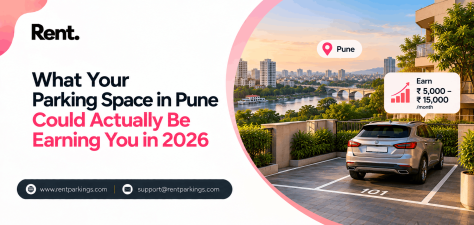
What Your Parking Space in Pune Could Ac...
24 Sep, 2026