

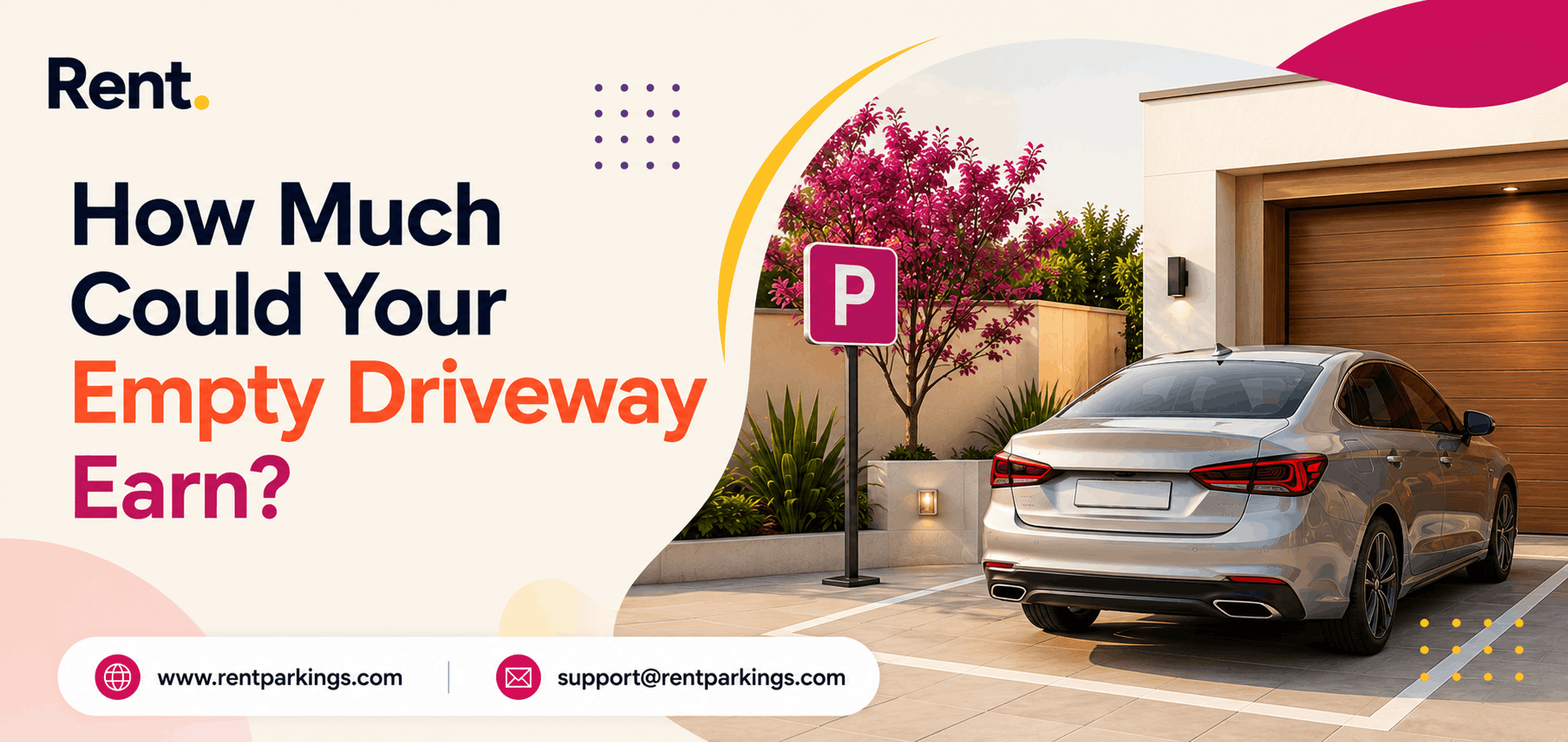
How Much Could Your Empty Driveway Earn?
A typical driveway brings its owner roughly $50 to $300 a month, and spaces wedged into crowded cities can climb past $400. Your number comes down to four things: where you live, how secure the space is, how reliably it's free, and how close it sits to the people who are desperate to park. Take the quick quiz below to see which earning band yours lands in.
Most people walk past their own driveway every morning without realizing it's idle money. While the car heads to the office, that rectangle of pavement just sits there, earning nothing, even though commuters, travelers, and event-goers two streets over would gladly pay to use it. This guide turns that hunch into a number, then walks you through every question you'll ask before listing.
When you're ready to put a price on it, you can list your driveway for free on RentParkings in a few minutes. Run the quiz first, though, so you go in knowing what your space is actually worth.
Quick quiz: what could your driveway earn?
Score one point for each "yes," then match your total to an earning band underneath.
- Does your driveway, garage, or assigned spot sit empty for long stretches while you're at work, away, or out for the night?
- Are you within walking distance of a train station, downtown core, hospital, college, airport, or stadium?
- Is parking near you scarce, expensive, or a daily headache for drivers?
- Is your space covered, gated, or simply safer than an exposed curbside spot?
- Can you offer it on a steady, predictable schedule instead of only now and then?
Tally your score:
- 4–5 points — strong earner. A space like yours can realistically clear $200 to $400 or more each month in a busy market.
- 2–3 points — middle of the pack. Plan on something in the $75 to $200 range, climbing higher once you widen your availability.
- 0–1 point — occasional earner. Demand may be lighter, so lean toward event-day or weekend renting, where a single busy day can still net $20 to $60.
Your real figure depends on the specifics covered below, so keep reading to learn what nudges a driveway toward the top of its band.
How much can I make renting my driveway?
Earnings for most hosts settle into the $50-to-$300-a-month range, with location doing most of the heavy lifting. In the tightest urban markets a single space can push beyond $400 a month, and a well-placed spot can add up to a few thousand dollars over a full year.
Four levers decide where you land:
- Where the space sits. A driveway minutes from a packed business district earns far more than one off a quiet country road. The priciest big-city spots sit in the high-hundreds per month, while smaller towns naturally come in lower.
- The type of space. Enclosed or covered parking commands a premium over an open driveway, often a third more for the same neighborhood, because drivers will pay extra for shelter and security.
- What surrounds it. Anything that draws a steady crowd raises your rate: stations, hospitals, campuses, airports, offices, and venues all create reliable demand.
- How often it's open. A spot you can offer around the clock outperforms one free only on weekday mornings, though even part-time hours quietly build up.
Before you settle on a price, glance at what similar parking spaces for rent nearby are charging. The single most common slip-up new hosts make is pricing a prime spot too cheaply.
Is it legal to rent out your driveway?
In most areas, yes. Renting out your driveway is generally allowed, but the answer turns on local zoning, whether you own or lease the property, any community association rules, and how frequently you rent. There's no one-size-fits-all national rule, so a handful of quick checks keep you safe before that first booking.
Run through these four points:
- City rules and zoning. Some towns limit paid parking in residential zones or want a permit for event-day setups. A short call to your local planning office clears it up fast.
- Your lease or mortgage. If you rent your home, the lease may forbid handing any part of the property to someone else, the driveway included. Get written approval first.
- Community association covenants. If a homeowners group governs your street, its rulebook almost certainly addresses parking. Read it closely and confirm with the board before you list.
- How often you do it. Renting the odd evening is treated very differently from running a full-time paid lot, and light, casual use rarely attracts the same scrutiny.
When something's unclear, just ask. A two-minute question now beats a fine or a frosty neighbor later. For a deeper dive, see our breakdown of the rules for renting out a parking space.
Do I need insurance to rent out my parking space?
Not always, but you should tell your home or renter's insurer about the arrangement and consider adding extra liability cover. Most established parking platforms also build some protection into bookings made through them, which softens the risk further.
Inviting another driver onto your property bumps up your exposure a little, since a stranger and their vehicle are now on-site. Adding a layer of personal liability cover, the kind that backs up your existing home policy once its limits are reached, is an inexpensive cushion if something goes sideways. Call your insurer, describe what you're planning, and ask what's already covered. Many hosts find their current policy plus the platform's protection is more than enough for casual renting.
Do I have to pay taxes on driveway rental income?
Yes. Anything you collect from renting your driveway counts as income and has to be declared, but you can shrink the bill by writing off related costs. Keeping a few simple records throughout the year makes filing painless.
Costs you can usually deduct include a portion of driveway upkeep and repairs, any added insurance premium tied to the rental, and the service fees the platform takes from each booking. Note what comes in and what goes out, and lean on the year-end payout summary your platform provides. If your earnings grow into serious money, a quick chat with a tax professional helps you claim everything you're owed. Treat this as general guidance rather than formal tax advice, and confirm the specifics for your own situation.
How do I rent out my driveway? (Step by step)
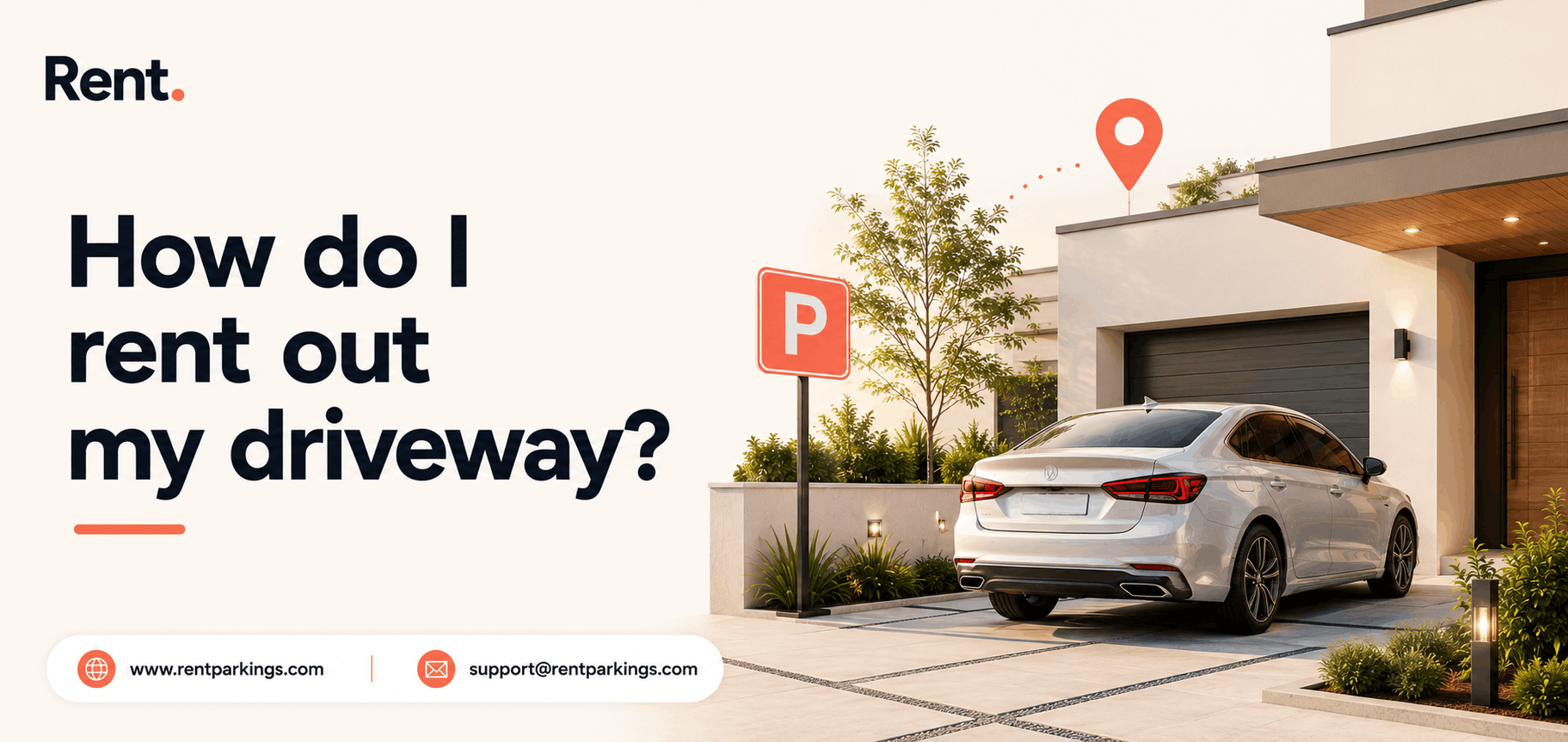
Getting set up takes about ten minutes: build a listing, add clear photos, set your price and hours, then approve bookings and collect your payouts automatically. Here's the full sequence.
- Measure and photograph the space. Record the dimensions, the surface, and whether it's covered, then take bright, clear shots from a couple of angles. Better photos book faster.
- Write the listing. Add the address, explain how access works (gate codes, tandem versus side-by-side, the biggest vehicle that fits), and flag nearby draws like a station or arena. You can create a free driveway listing in minutes.
- Set price and availability. Compare local spots, choose hourly, daily, weekly, or monthly rates, and mark the windows when the space is genuinely open.
- Approve bookings. Decide between instant booking and reviewing each request yourself, and share any arrival notes through the in-app chat.
- Get paid automatically. Money flows through the platform and lands in your account on a set schedule, so there's no cash to chase.
Once you're live, small habits, like answering quickly and keeping your description accurate, earn stronger reviews, and stronger reviews lift your listing and fill it sooner.
Where is renting out a parking space most profitable?
The biggest earners sit beside constant, heavy parking demand: city centers, transit hubs, airports, hospitals, universities, arenas, and event venues. Wherever parking is scarce and costly, a private driveway suddenly carries real value.
Live near a commuter rail line and you can rent to the same weekday driver month after month, which is about as steady as side income gets. Near a stadium or concert hall, one event night can out-earn a whole week of regular rates. Homes close to an airport draw travelers happy to leave a car safely for days at a fraction of airport-lot prices. Even driveways beside a hospital pull in staff and visitors worn out from circling for a space. Check the monthly parking demand near you to gauge how hungry your local market really is.
When can I rent out my driveway?
Whenever it would otherwise sit empty, which for most people means weekday work hours, overnight, weekends, or local event days. You control the calendar, so it flexes around your own routine.
Plenty of hosts start by renting only while they're at work, scooping up the weekday commuter crowd without ever meeting the renter. Others open weekends for shoppers and event traffic, or hand a single long-term parker round-the-clock access for maximum stability. You can block out holidays, vacations, or any day you need the space back. That flexibility is the whole appeal: the driveway earns on your terms, never the other way around.
Can I rent out a driveway if I'm a tenant?
Sometimes, but only with your landlord's written go-ahead. Your lease governs what you can do with the property, and many leases bar handing any part of it, parking included, to someone else without approval.
If a driveway or spot comes with your unit, ask your landlord directly whether you can rent it out and get the yes in writing. Some landlords are perfectly happy to allow it, especially if you offer a small cut or simply keep things low-key and respectful of the neighbors. Don't assume it's fine just because the space technically came with the place. A clear answer upfront protects both your tenancy and your income.
How RentParkings makes it easy
RentParkings is a community-driven parking marketplace that connects drivers hunting for a spot with people who have one going spare. Listing costs nothing, you set your own rate and schedule, and payments are handled securely, so an idle driveway turns into dependable income without the usual hassle.
Whether you want one long-term parker for steady monthly cash or you're cashing in on event-day crowds, the platform handles discovery, booking, and payment while you keep full control of the space. Ready to begin? List your parking space on RentParkings today, or if you're the one searching, find parking near you instead.
Frequently asked questions
How much does it cost to list my driveway?
Listing on RentParkings is free. A small service fee only applies once you actually earn from a booking, so there's nothing to pay before you start.
How quickly can I start earning?
A listing goes live in around ten minutes. How fast it books depends on local demand, but spaces near transit, venues, and city centers often get inquiries within days.
What kinds of spaces can I rent out?
Driveways, garages, carports, parking pads, and unused assigned spots all qualify. As long as a vehicle can park there safely and you have the right to rent it, you can list it.
Do I have to be home when someone parks?
No. Most hosts never meet their renters. You pass along any access details through the platform, and contactless arrangements are common, especially for monthly parking.
Is my space protected if something goes wrong?
Reputable platforms include protection on bookings made through them, and you can add personal liability cover through your own insurer. Confirm the details of both before you list.
Can I rent my driveway just for events?
Yes. Event-only renting is popular near stadiums, arenas, and festival grounds and can be highly profitable. Just check any local permit rules for high-traffic event parking first.
Share This post
Search
Recent Post
Parking Space vs. Renting Out a Room to...
05 Oct, 2026
Think Parking Rental Only Pays in Mumbai...
02 Oct, 2026
Your Mumbai Parking Space Is Worth More...
01 Oct, 2026

Hyderabad's Real Estate Boom Left One As...
30 Sep, 2026

What Your Parking Space in Chennai Could...
29 Sep, 2026
Your Plans Changed After Listing Your Pa...
28 Sep, 2026
Parking Space vs SIP: Which Idle Asset A...
25 Sep, 2026

What Your Parking Space in Pune Could Ac...
24 Sep, 2026