

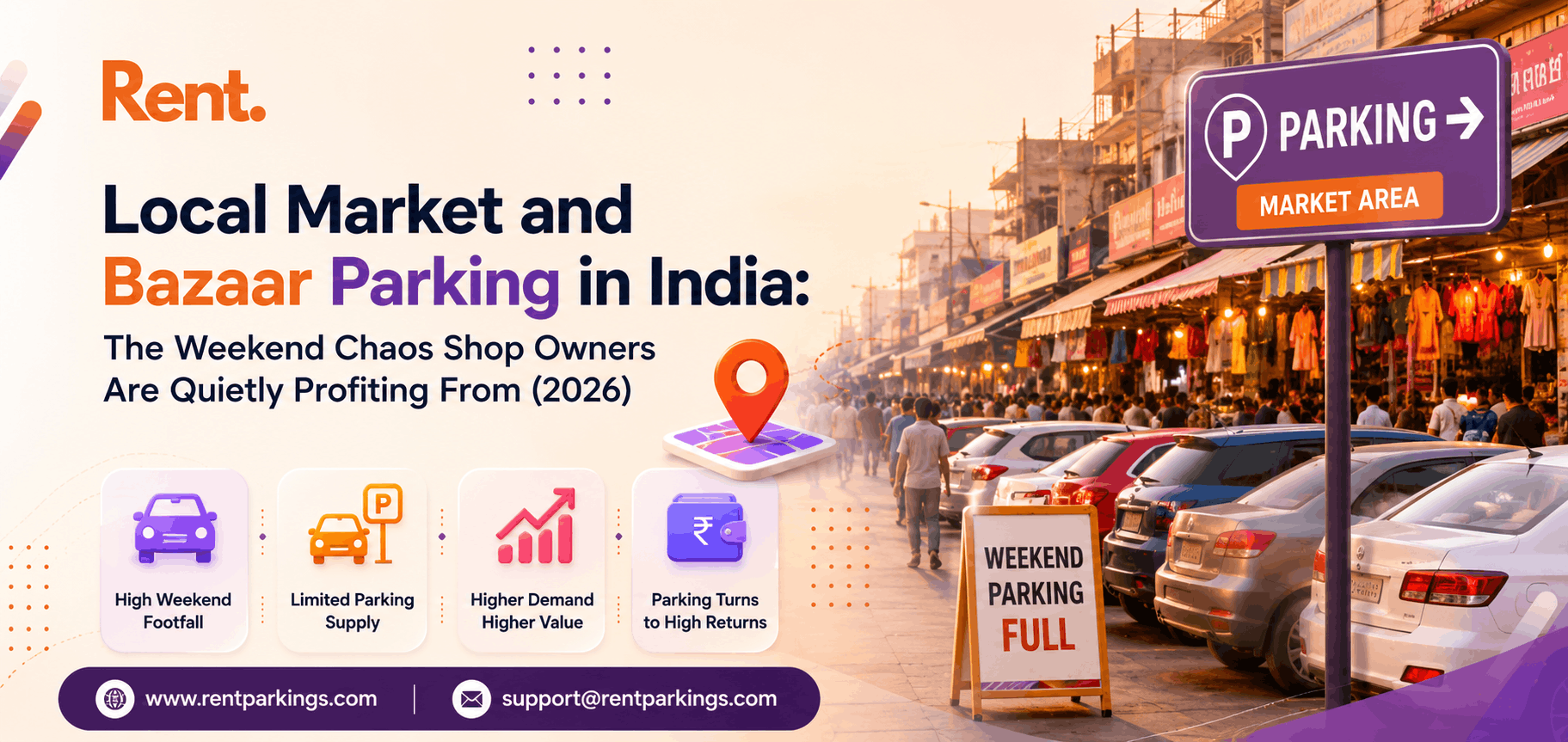
Local Market and Bazaar Parking in India: The Weekend Chaos Shop Owners Are Quietly Profiting From (2026)
Ask a shopkeeper in Sarojini Nagar why parking near the market is such a mess, and most will blame the traffic police. Ask a traffic constable, and he'll point right back at the shopkeepers who turned their own frontage into extra shelf space years ago.
Both are half right. Both are also missing the actual problem: nobody ever designed these markets to hold cars in the first place.
That's the story behind nearly every major bazaar in urban India: Chandni Chowk in Delhi, Commercial Street and Chickpet in Bengaluru, T Nagar in Chennai, Manek Chowk in Ahmedabad, Laad Bazaar in Hyderabad, Johari Bazaar in Jaipur. These lanes were built for foot traffic, handcarts and the occasional bullock, generations before anyone owned a car. Retrofitting parking into a centuries-old street grid isn't really a policy failure so much as a geometry problem, and it's one most municipal corporations have quietly stopped trying to solve.
For property owners who happen to live or run a shop within walking distance of one of these markets, that unsolved problem has turned into a steady source of income. This piece looks at why bazaar parking is structurally different from mall parking or mandi parking, which Indian markets feel it worst, and how nearby owners are using platforms like RentParkings, India's parking marketplace, to rent out driveways, empty plots and unused compounds to shoppers who'd otherwise be circling the block for twenty minutes.
Why Bazaar Parking Is a Different Animal
It helps to separate three kinds of Indian shopping destinations, because they behave nothing alike.
Organised retail, the malls and multiplexes, usually comes with a basement or a multi-level structure built into the plan from day one. Wholesale markets and mandis run on a pre-dawn trading rhythm, mostly trucks and loading vehicles, done and cleared before the city even wakes up.
Bazaars sit in a category of their own. They're unorganised, dense, and driven almost entirely by walk-in retail footfall that peaks in the evening and on weekends. There's no landlord who can decide to build a parking deck, because the market itself grew organically out of hundreds of individually owned shops over decades. Nobody actually owns the problem, which is exactly why it never gets fixed at a structural level.
Add festival shopping, wedding-season buying sprees and Sunday family outings on top of that daily crunch, and you get streets where a five-minute errand can turn into a forty-minute hunt for somewhere legal to leave the car.
Where the Crunch Is Worst Right Now
Some markets have become almost synonymous with parking despair. A shortlist that comes up constantly in owner conversations:
- Sarojini Nagar and Lajpat Nagar, Delhi: narrow internal lanes, heaviest footfall Thursday through Sunday, virtually no off-street parking.
- Chandni Chowk, Delhi: mixed wholesale and retail traffic in one of the densest urban cores in the country.
- Commercial Street and Chickpet, Bengaluru: one-way lanes that were never meant to carry two-wheeler volumes this heavy.
- T Nagar, Chennai: routinely cited as one of the most congested commercial pockets in South India, especially around Ranganathan Street.
- Colaba Causeway and Fashion Street, Mumbai: high tourist and shopper footfall competing for the same handful of curb spots.
- Manek Chowk, Ahmedabad: doubles as a food street after dark, doubling the parking pressure on the same stretch of road.
- Laad Bazaar, Hyderabad: bangle and jewellery shoppers, wedding parties, and daily commuters all fighting for the same narrow approach roads.
Owners with a driveway, an open plot or even a spare stretch of compound wall near any of these stretches are sitting on something more valuable than they usually realise. A few of them have already worked out how to turn a driveway into a rental income stream rather than just a place to park their own scooter, an idea covered in detail in the piece on how much a rented-out driveway can actually earn.
What Shoppers Are Actually Willing to Pay
Bazaar parking pricing behaves differently from residential or office-area pricing, because demand is compressed into short, intense windows rather than spread evenly across the day.
A rough sense of what owners near busy markets are reporting, city by city, in 2026:
| City / Market Type | Two-Wheeler (per visit) | Car (per hour) | Peak Season Uplift |
|---|---|---|---|
| Delhi bazaars (Sarojini Nagar, Chandni Chowk) | ₹20-40 | ₹40-70 | 25-40% higher in wedding/festive season |
| Bengaluru bazaars (Commercial St, Chickpet) | ₹15-30 | ₹40-60 | 20-30% higher during Deepavali shopping |
| Chennai (T Nagar corridor) | ₹15-25 | ₹35-60 | Sharp spikes during silk season and weddings |
| Mumbai (Colaba Causeway, Fashion Street) | ₹20-35 | ₹50-80 | Consistent, tourist-driven, less seasonal |
| Hyderabad and Ahmedabad bazaars | ₹15-30 | ₹35-55 | 25-35% higher during wedding season |
These are estimates gathered from owners and small operators we've spoken with, not official published tariffs, and they shift with location, distance from the market entrance and how reliably safe the spot feels after dark.
Two-wheeler volume tends to be where the real money sits, simply because bikes and scooters make up the overwhelming majority of shopper traffic near dense bazaars. Ten two-wheelers cycling through a small plot on a Saturday afternoon can out-earn two or three cars parked for the whole day, a pattern the general breakdown of what a rented-out plot can generate goes into more fully in this look at renting parking space for income.
Turning a Spare Plot Into a Market-Day Business
Owners who've done this well tend to follow a similar pattern, whether they're renting out a shop-front driveway in Chandni Chowk or a residential compound two lanes off Commercial Street.
- Map the actual peak hours. Bazaar footfall isn't constant. Evenings, Saturdays and Sundays usually dwarf weekday mornings, and pricing should follow that curve rather than staying flat all week.
- Decide between attended and self-service. A watchman or family member managing entry and exit reduces disputes and theft risk, but self-service with a simple token system works fine for smaller two-wheeler-only setups.
- Set clear boundaries. Painted lines or cones, even on a small plot, cut down arguments over who parked where and make the space feel legitimate rather than improvised.
- Accept UPI and cash both. Shoppers moving through a crowded bazaar rarely want to fumble with exact change, and a simple QR code at the entrance speeds up turnover considerably.
- List the space where shoppers are already searching. Word of mouth only goes so far in a market this dense; being discoverable on a platform shoppers actually check before they arrive matters more than a hand-painted signboard.
For owners just getting their bearings on the process end to end, from listing to first booking, the walkthrough on turning empty parking spots into smart earnings is a reasonable starting point before jumping in.
The Legal and Safety Side Owners Shouldn't Skip
Renting out space near a crowded bazaar isn't complicated, but a few basics protect both the owner and the shopper.
- Keep the arrangement informal but documented: a simple daily or monthly rate sheet, even a WhatsApp confirmation, avoids disputes later.
- Photograph the vehicle's condition at entry if you're offering an attended spot, particularly during festival crowding when scratches and dents are more likely.
- Check whether the plot falls under any municipal no-parking or encroachment notification before formalising anything, since bylaws differ street by street in older market areas.
- If the space sits along a route the local traders' association has already flagged for congestion, a quick conversation with them tends to smooth things over faster than finding out the hard way.
None of this needs a lawyer or a formal contract. It just needs a little more care than parking a friend's car for an afternoon, especially once real money and unfamiliar vehicles are involved. For the fuller framework on documentation and everyday listing hygiene, the general guide on renting out parking space in India covers the basics worth having in place before the first booking comes in.
Why Festival Season Changes Everything
Diwali, wedding season and regional festivals like Onam or Durga Puja shopping don't just add a few extra shoppers to a bazaar. They can double or triple footfall for two to three weeks straight, and parking scarcity during that window is where owners near these markets see their sharpest earnings.
Shops that are otherwise quiet on a Tuesday afternoon in June can be unrecognisable the week before Diwali, with queues forming just to enter the lane. Owners who plan for that surge, by clearing extra space, adjusting pricing upward for the peak dates, and making sure the spot is listed and bookable well before the rush starts, tend to capture a disproportionate share of that seasonal spike. It's the same underlying dynamic covered in the broader look at India's busiest parking rush zones, just compressed into a market-specific, calendar-driven window rather than spread across the year.
Frequently Asked Questions
Why don't India's busiest local markets have proper parking lots?
Most bazaars grew organically over decades or centuries, long before car ownership was common, so the lane widths and plot sizes simply weren't built to accommodate parking. Retrofitting a parking structure into an already dense, informally owned market is expensive and logistically difficult, which is why most municipal corporations have never attempted it at scale.
Which Indian markets have the worst parking shortage in 2026?
Sarojini Nagar and Chandni Chowk in Delhi, Commercial Street and Chickpet in Bengaluru, T Nagar in Chennai, and Colaba Causeway in Mumbai are consistently flagged as the hardest places to find legal parking, especially on weekends and during festive shopping weeks.
How much can I earn renting out space near a busy bazaar?
It depends heavily on location and distance from the market entrance, but owners near high-footfall bazaars have reported anywhere from a few hundred rupees on a slow weekday to several thousand rupees during a single festival weekend, largely driven by two-wheeler volume.
Is it legal to rent out my driveway or compound near a market for parking?
In most cases, yes, as long as the property isn't under a specific municipal no-parking or encroachment notification for that stretch of road. It's worth a quick check with local authorities or the area's traders' association if the plot sits directly on a congested main lane.
Should I charge by the hour or a flat visit rate near a market?
Flat per-visit pricing tends to work better for two-wheelers making quick shopping trips, while hourly pricing suits cars or longer visits. Many owners near bazaars run both, a flat token rate for bikes and an hourly meter for cars.
How much does festival season change parking demand near markets?
Footfall near major bazaars can double or triple during Diwali, wedding season, or regional festivals, and parking scarcity during that window is usually where owners see their biggest earnings jump of the year.
Is two-wheeler parking near a bazaar actually more profitable than car parking?
Often, yes. Bikes and scooters make up the bulk of shopper traffic in dense bazaars, and a small plot can cycle through far more two-wheelers than cars in the same few hours, which adds up faster than a handful of all-day car parkers.
What safety steps should I take before opening my space to bazaar shoppers?
Mark clear boundaries, keep a simple entry record if the space is attended, and photograph vehicle condition at drop-off during high-traffic periods. None of this requires formal paperwork, just a bit more diligence than casual parking arrangements.
How does RentParkings help owners near local markets find renters?
RentParkings lists available spaces so shoppers searching for parking near a specific market or street can find and book a verified spot before they even arrive, instead of circling the lane looking for somewhere to leave the vehicle.
Can I rent out bazaar-adjacent parking on a monthly basis to regular shopkeepers or staff?
Yes, and many owners do exactly this for shop staff, delivery riders or nearby vendors who need daily parking, while reserving the busier weekend and festival slots for higher-paying shopper traffic.
The Opportunity Hiding in Plain Sight
Every bazaar in this piece has existed for decades without a real parking plan, and none of them are getting one anytime soon. Municipal corporations have bigger, slower-moving priorities, and the lane geometry in most of these markets simply won't allow a conventional fix.
That gap isn't going away, which means the income opportunity for owners nearby isn't either. A driveway, an unused plot or even a stretch of compound near a busy market lane can turn into a genuinely useful side income, especially once festival season hits and shoppers are willing to pay a little extra just to stop circling the block.
If you own space within walking distance of a market like this, there's no reason it should sit empty while shoppers a few streets away are hunting for somewhere legal to park. List your parking space on RentParkings and start earning from the footfall that's already showing up at your doorstep, on your own terms, whether that's an hourly rate on weekends or a steady monthly arrangement with nearby shop staff.
Share This post
Search
Recent Post
Parking Space vs. Renting Out a Room to...
05 Oct, 2026
Think Parking Rental Only Pays in Mumbai...
02 Oct, 2026
Your Mumbai Parking Space Is Worth More...
01 Oct, 2026
Hyderabad's Real Estate Boom Left One As...
30 Sep, 2026
What Your Parking Space in Chennai Could...
29 Sep, 2026
Your Plans Changed After Listing Your Pa...
28 Sep, 2026
Parking Space vs SIP: Which Idle Asset A...
25 Sep, 2026
What Your Parking Space in Pune Could Ac...
24 Sep, 2026