

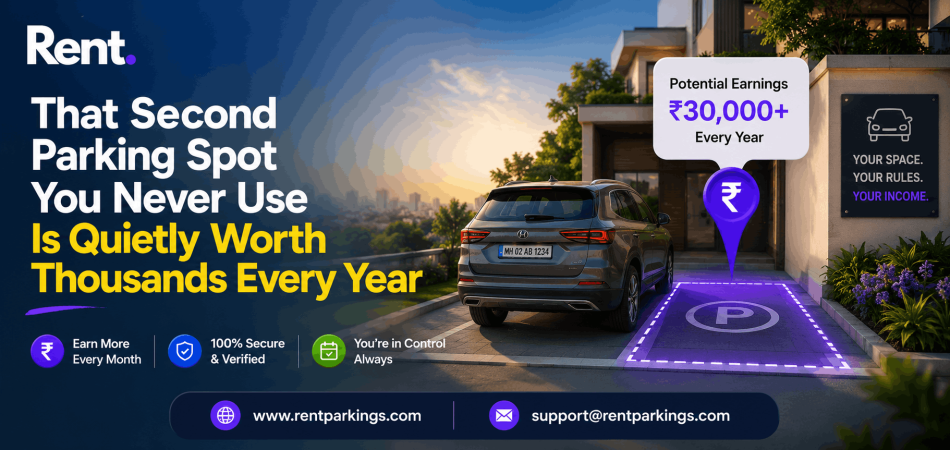
That Second Parking Spot You Never Use Is Quietly Worth Thousands Every Year
Yes, finding parking in any Indian city has become a daily test of patience, creativity, and mild desperation. That part everyone knows. What gets less attention is what sits on the other side of that problem — the thousands of parking spots across Mumbai, Bengaluru, Delhi, Hyderabad, and Pune that stay empty from Monday to Friday, week after week, earning absolutely nothing for their owners.
The irony is sharp. Drivers are circling residential streets near railway stations, squeezing into gaps outside temples, and paying premium rates for unreliable roadside spots — while covered, secure, private parking sits unused just a few buildings away. Nobody connected the two sides. That is what RentParkings was built to fix.
If you own a parking space you are not fully using, this platform turns it into a consistent monthly income with almost no effort on your part. This article explains how and what you can realistically expect from it.
Why Unused Parking Space in India Has Real Monetary Value
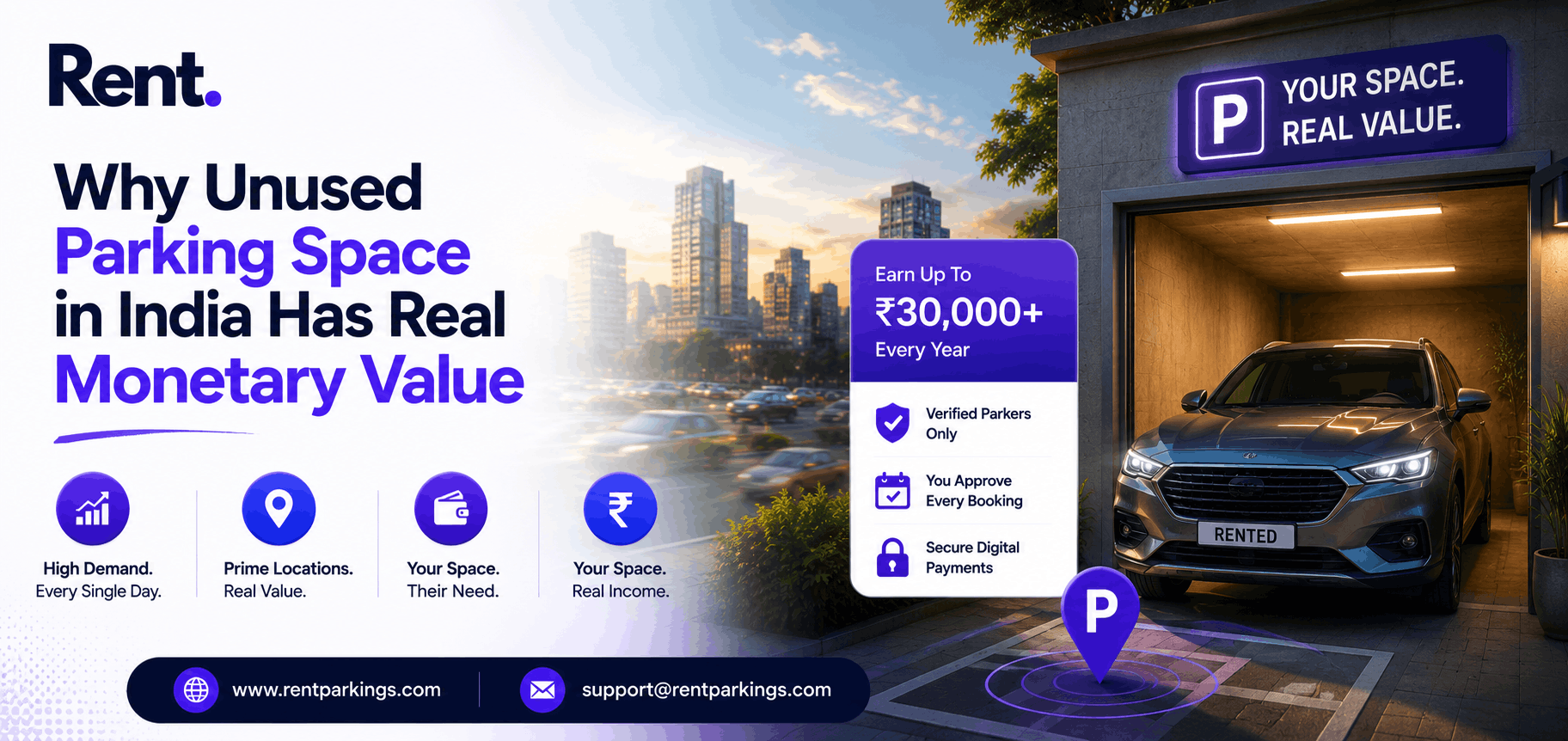
Urban India has added tens of millions of registered vehicles over the last decade. Roads are congested. Parking infrastructure in most cities has not kept pace. The result is a widening gap between what drivers need and what cities officially provide.
That gap creates genuine market value for private parking. A covered spot near a railway station, a hospital, a busy market, or a temple is something people in your city will pay a fair monthly rate to secure. The demand is not seasonal or uncertain. It is a daily, recurring need that grows as vehicle numbers grow.
When you list your space on RentParkings, you are not doing anything complicated. You are simply connecting an asset you already own with people who are actively searching for it right now.
What Kind of Space Qualifies?
The range of eligible spaces is broader than most owners initially assume. You do not need a commercial complex or a formal parking structure to participate.
A covered slot in an apartment society basement, an open driveway beside an independent home, a gated compound corner on a residential plot, a covered carport attached to a villa — all of these work on RentParkings. The criteria are simple: the space must fit at least one vehicle, and you must own or control access to it.
The spaces that generate the highest monthly income tend to fall near specific locations. Browse listings across India to understand current demand and pricing in your area.
Locations That Drive the Highest Demand
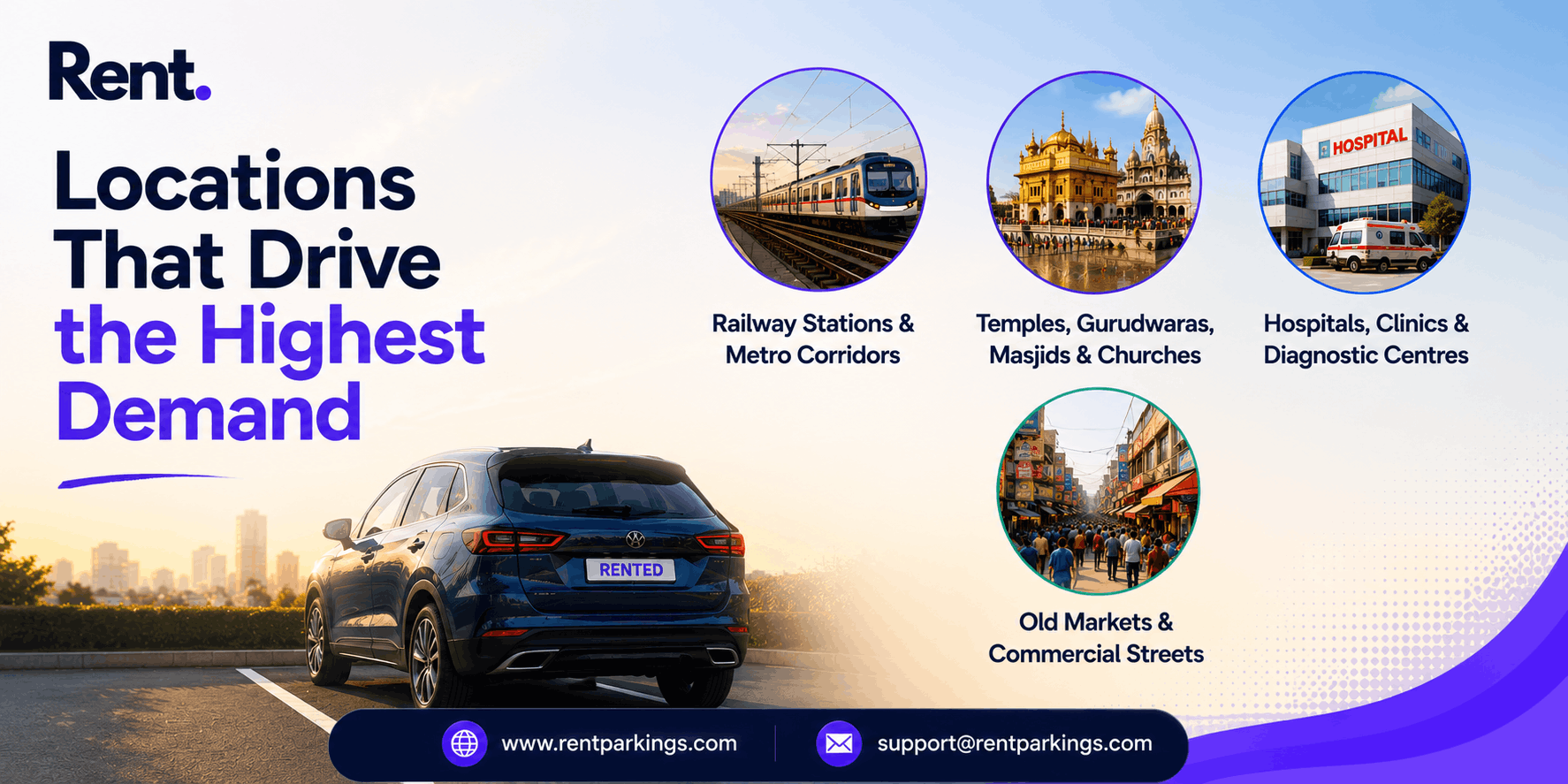
Parking demand in India clusters tightly around certain location types. Knowing where your space sits relative to these helps you set a competitive price and attract the right renters.
Railway Stations and Metro Corridors
Commuters who take suburban rail or metro to work every weekday need secure vehicle parking close to their boarding point. This is not an occasional convenience — it is a daily requirement. Once a commuter finds a reliable private spot near their station, they tend to hold onto it for months without disruption. Monthly contracts near stations are among the most stable on the platform. See demand near railway stations in your city and check how similar spots are priced.
Temples, Gurudwaras, Masjids and Churches
Religious sites across India draw predictable, recurring footfall on specific days and during festivals. Official parking at these sites fills quickly and often runs out entirely. Private spots within walking distance of a temple, dargah, or gurudwara are in genuine demand, particularly on peak days when visitors are willing to pay a premium for something safe and accessible. Check available and needed parking near religious sites in your locality.
Hospitals, Clinics and Diagnostic Centres
Healthcare-related parking is among the most stable categories on the platform. Patients attending regular treatment, caregivers managing multiple weekly visits, and hospital staff on predictable shifts all want the same thing: one confirmed spot they do not have to think about. Monthly bookings near medical facilities renew consistently and rarely generate complications.
Old Markets and Commercial Streets
The commercial cores of most Indian cities were built before motorised transport became dominant. Parking supply in these zones has never caught up with footfall. Streets like Chickpet in Bengaluru, Aminabad in Lucknow, and Linking Road in Mumbai generate constant demand for private spots. A covered space, a short walk from a busy market,t is genuinely hard to find and easy to rent out.
City-Wise Earning Estimates
Monthly earnings vary based on city, neighbourhood, and whether your space is covered or open. Below is a realistic breakdown based on current market rates.
Mumbai: Covered spots near western and central railway line stations earn Rs 4,800 to Rs 9,000 per month from monthly commuter contracts. Open spots in similar zones fetch Rs 2,500 to Rs 5,200.
Bengaluru: Covered parking near IT corridors and Namma Metro stations, such as Whitefield, Koramangala, Bellandur, and Indiranagar, earns Rs 3,500 to Rs 7,500 per month.
Delhi and Gurugram: Premium localities, commercial zones, and well-connected metro-adjacent areas pull Rs 6,000 to Rs 10,000 monthly for covered spots.
Hyderabad: HITEC City, Banjara Hills, and Gachibowli corridors produce Rs 3,000 to Rs 6,500 for covered monthly parking.
Pune: IT parks in Hinjewadi and Kharadi, along with areas like Kothrud and Deccan Gymkhana, generate Rs 2,800 to Rs 5,500 per month.
Tier-2 cities, including Jaipur, Indore, Lucknow, and Coimbatore: Monthly earnings range from Rs 1,800 to Rs 4,000. Competition among listed owners in these cities is currently low, which means well-presented listings get noticed quickly.
For a figure specific to your exact address, use the RentParkings earnings calculator.
How to List Your Space: A Clear Walkthrough
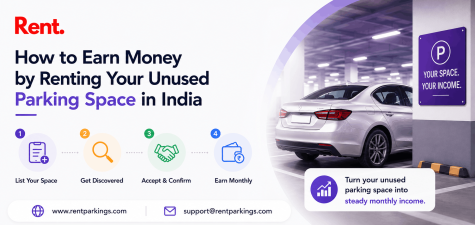
The listing process on RentParkings is designed to be completed in a single sitting. Here is what each step actually involves:
Step 1: Create your listing. Visit RentParkings.com and describe your space. Specify whether it is covered, open, or in a basement. Indicate which vehicle types it accommodates — car, two-wheeler, or both. Add your precise address and the hours your space is available.
Step 2: Set your price. You decide the monthly or daily rate. Before finalising a number, read the parking pricing guide for your city. It covers what comparable spots are earning nearby and helps you set a rate that attracts renters without undervaluing your space.
Step 3: Add strong photographs. Upload clear, daylight photos showing the full space, the entry point, and any roof coverage. Listings with quality photographs consistently receive more enquiries and book faster than those without.
Step 4: Review and confirm your renter. When interested renters contact you through the platform, you review their details and make the final call. Before handing over access, collect a valid government-issued ID and the vehicle registration number.
Step 5: Formalise with an agreement and collect payment. A monthly upfront payment is both the standard practice and the safest option for owners. Use the standard parking rental agreement template available on RentParkings — it is ready to use and covers all the terms you need.
From the first visit to the published listing, most owners are done in under twenty minutes. For detailed guidance on anything specific, visit the owner's FAQ page.
Common Questions from First-Time Listers
How much can I earn each month from my parking space?
Earnings depend on your city, neighbourhood, and space type. Covered spots in metro cities near transit hubs earn Rs 4,000 to Rs 10,000 monthly. Tier-2 city rates typically range from Rs 1,800 to Rs 4,000. The most accurate estimate comes from the earnings calculator or your city page on RentParkings, both of which reflect real listing data.
Do I need approval from my housing society?
Apartment owners should review their society's bylaws before listing. Most societies do not prohibit owners from renting allotted parking spots, especially to verified, registered-vehicle users. Independent homeowners require no third-party approval. For a state-by-state breakdown of what the law says about private parking rentals, see the legal guide for owners.
Is private parking rental legally valid in India?
Yes. Renting a privately owned parking space through a formal written agreement is a completely legal private rental transaction in India. A signed parking rental agreement documenting the space, duration, and monthly amount is all the documentation required. No commercial licence or GST registration applies to individual owners renting a single spot.
My space is only free during weekday hours. Does that limit my options?
Not at all. Weekday daytime parking is one of the most in-demand categories on the platform, driven by office commuters and working professionals. You define your availability during listing setup. Partial availability listings fill regularly and generate consistent income from hours that would otherwise sit idle. List your space and configure your hours from the start.
How long does it take to get the first renter?
Spaces in high-demand zones with clear photographs and accurate pricing typically receive enquiries within three to seven days. Listings in lower-footfall areas can take two to three weeks. The listing optimisation guide covers the specific adjustments that most reliably shorten the time from publishing to first booking.
The Straightforward Logic Behind Listing Now
Urban parking demand in India is not easing. Every year, more vehicles are registered and fewer new parking spaces open. The mismatch between supply and demand that makes private parking valuable today will be more pronounced next year and the year after that.
A space that earns nothing this month will continue earning nothing until you change its status. The renters looking for parking in your area are on RentParkings right now. The only missing piece is your listing.
List your parking space for free on RentParkings today and start earning this month.
Share This post
Search
Recent Post
How to Earn Money by Renting Your Unused...
03 Jun, 2026
Your Parking Space Is Silently Burning M...
02 Jun, 2026
Own a Parking Space? These 6 Locations i...
01 Jun, 2026
Your Empty Parking Space Is an Untapped...
29 May, 2026
How to Turn Your Empty Parking Space Int...
28 May, 2026
Your Parking Slot Is Outperforming Your...
27 May, 2026
How to Earn Money by Renting Your Unused...
23 May, 2026
Your Parking Space Already Has a Tenant....
22 May, 2026